
Building the Right Room
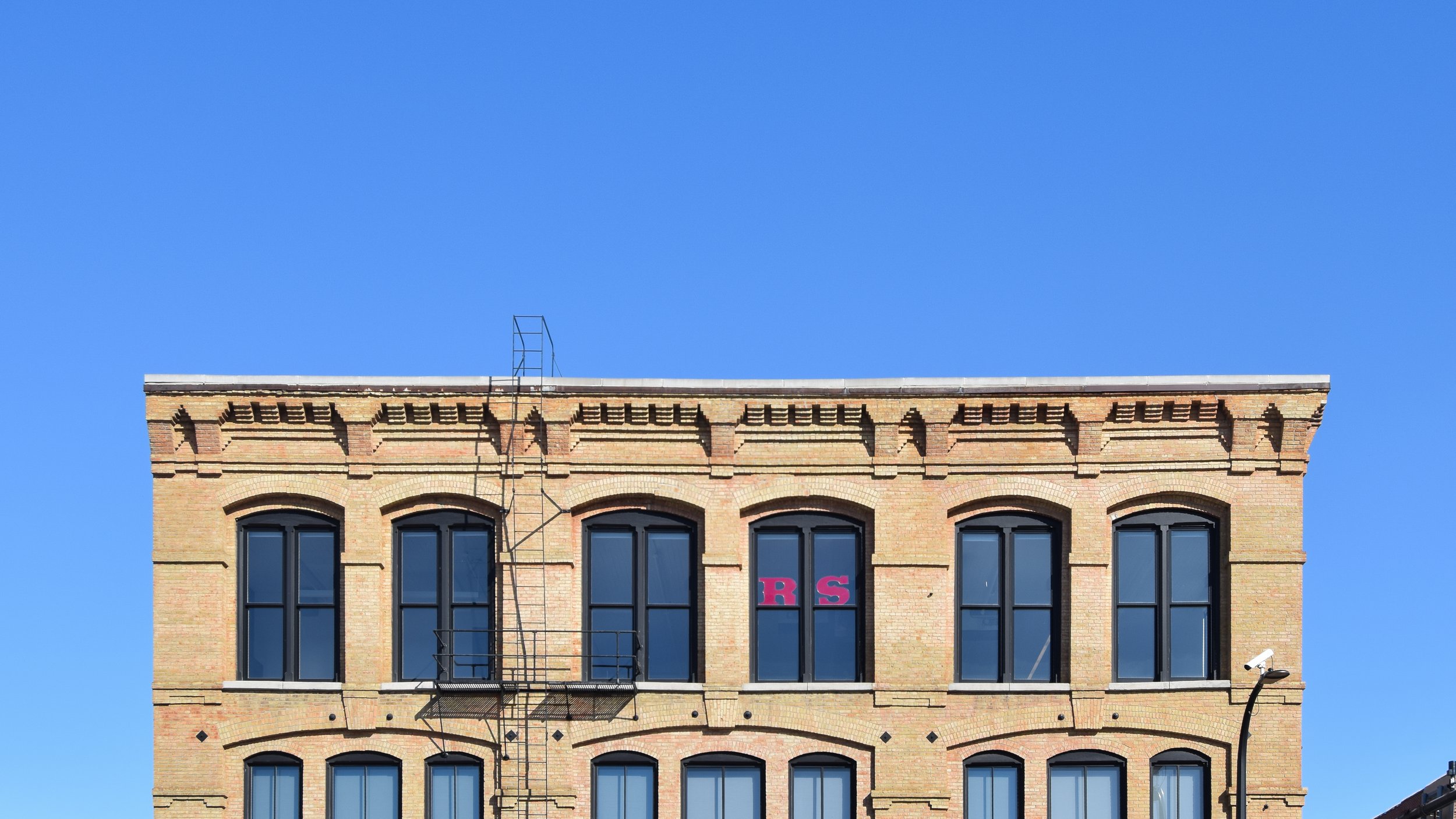
The first RoehrSchmitt office, at 201 6th St SE
What Forty Years in Architecture Taught Me About Building a Durable Practice
— by CHRIS SCHMITT, AIA

I got my first job in architecture because my father told me it couldn’t be done.
Almost from the moment I began to understand what an architect might actually do, I was hooked. His challenge, the profession itself, and the idea that someday I might become an architect with the vision, the expertise, and the answers was – intoxicating.
Four decades later, I’m still here. But I’m far less interested in having all the answers. These days, I’m much more driven by building the right room.
I’ll get to what I mean by that. But first, back to my father.
LIGHTING A FUSE
It was the summer of 1985. I was 19. I had just finished my first year of college engineering classes, where I learned two things: I would not have been a good engineer and I wanted to become an architect. My father, ever the engineer, thinking that this change of direction was silly, challenged me to prove I could find a place in a profession that was notoriously difficult to enter. Challenge accepted.
With the stubbornness taught to me by said father, I pulled out the Yellow Pages (it was 1985, after all) and began calling every architecture firm listed, asking whether they had a position for a student who aspired to become an architect — even though I was not yet enrolled in any architecture program, anywhere. Side bar: fake it til you make it. I guess I learned three things.
So I kept calling until I was halfway through the alphabet. Somewhere in the M’s, someone finally gave me a chance.
That first job quickly corrected most of my romantic notions about architecture. I learned that doing the work well was demanding, detailed, and required a lot of hard work. I learned that I was by no means good at this thing I desperately wanted to be good at. And that I was in love with a job that I might just be able to do for a long time.

an emerging architect
That first summer also introduced me to an idea that would follow me through the early part of my career: becoming a good architect meant accumulating enough knowledge, skill, and certainty to be the person with the answers. What pressure.
Architecture, of course, has long encouraged that image of itself. The architect is often imagined as the singular author—the person with the vision, the expertise, and the final word. When you are young and trying to establish your place in the profession, that can be a compelling model. Competence feels like something you must continually prove, and leadership can look a lot like control.
Forty years later, I still believe deeply in expertise, preparation, and judgment. What has changed is my understanding of where those strengths come from. I know now that the strength of a practice is not found in the ideas and authority of one individual. It is found in creating a room where good judgement can develop, responsibility can be shared and through the natural course of doing the work, and having fun, we learn to lead.
BUILDING THE ROOM
What does it mean to build the right room? I love a really beautiful space, but building the right room for making great architecture means more to me than the aesthetic experience. It means creating a room where a team can thrive. Where the work can be hard without being made harder than it needs to be. Where the people doing the hard work of creating architecture can be really good at getting that work done.

Frictionless work is like perfection. It doesn’t exist. But leaders can, and often do, create obstacles for their teams that make the work harder. Frictionless doesn’t mean removing challenge, disagreement, or rigor from the process; those are important parts of creating good work. The friction I am interested in removing is the kind that adds nothing: uncertainty about who can make a decision, information that is guarded or hidden rather than shared, or people afraid to offer an unfinished idea. A strong practice should not make it harder for talented people to do the job they were hired to do.
The right room should also be centered on bringing good judgment to the work. That does not mean deferring to the judgment of others in the room, either. Instead practice leaders should create an environment where judgment is consistently practiced, shared, and taught.
The best leaders practice it by helping every team member understand why the work matters, why decisions need to be made at the appropriate stage of a project’s development, and what problems we are actually trying to solve. We teach it by showing designers and emerging architects that their ideas are valued, that experience should inform exploration rather than shut it down, and that a good idea can come from anyone in the room.
SEEING THE ROOM CLEARLY
The room should also be clearly visible. How we work, how we communicate, the systems we use, and the consistency we bring to every project should not be mysterious. That clarity matters not only to our immediate team, but also to our clients, design partners, contractors, and everyone else who works with us. They should be able to see both how we work and why consistently.
This is more than a cultural idea. It strengthens the room. Clear processes reduce confusion, improve accountability, support better decisions, and make the practice more profitable and scalable. Clarity is a superpower.
Opportunity, Leadership and Delegation
There is a reality in our business that most won’t admit. The people who are actually designing our buildings are the people drawing the building represented in the construction documents — but they’re not the most senior people in the firm. The construction documents, the CDs, are what actually gets built. The renderings don’t get built. The partner's eloquent description of the work in a well-received client meeting does not get built. It's the actual work as represented in the CD’s. Plans, sections, elevations, and specifications. That’s it. Same as it's ever been.

It’s helpful to know this fact when you’re building the room. I want my team to understand this idea because once it’s heard and understood, it's empowering - and also a bit scary. The person drawing the CD’s, regardless of their level of experience, controls the means of production around every aspect of the work. The choices they ultimately make, big, small, or tiny, around how to draw or describe every aspect of the project, is what the building will become.
That does not mean that an emerging designer or architect should use only the judgement of their own years to make these decisions. But it is at this point in the process where either good things happen, or mistakes are made.
Projects go best when leadership is not something one person does alone, but something that is shared across the team. The person drawing the detail has responsibility. The person reviewing it has responsibility. The person asking the question nobody else thought to ask has responsibility. Good delegation is not simply handing work down; it is giving people enough ownership to care deeply about the outcome, while surrounding them with the judgment, support, and trust to make good decisions.
That is the room where opportunity and leadership begin to overlap. People grow when they are trusted with work that matters. They develop judgment by exercising it, testing it, and occasionally being wrong in a room where everyone is paying attention. The goal is not to eliminate mistakes. It is to build a room where people can become increasingly capable of recognizing those missteps, correcting them, and making better decisions the next time.
Over time, that kind of room produces something much more valuable than efficient delegation. It produces more leaders.
Making architecture, whether you are doing it in a good room or not, is a team effort. The genius who sees the design, complete and total in their mind’s eye is telling a lie. Because the work is not something that one person can bring to life alone. It is not a noun. It is a verb. It’s a practice. Done consistently and with an emphasis on collaboration. You will never practice architecture without collaborating, so you better work to become really good at collaborating. Every one of us that touches the intention and execution of each project brings a different kind of intelligence to that project. A room that knows and develops that idea will be successful. Over a career, great architects are probably less known for their profound ideas about buildings, but for their ability to create an environment where smart people can thrive making great architecture.
Durability

Durable is kind of an old fashioned word. But it is a really important word for building the right room or a long lasting practice. Because a truly durable practice does not become dependent on one individual’s genius. A practice dependent on one person’s knowledge, relationships, or decision-making is inherently fragile. A durable practice does not concentrate judgment, responsibility, relationships, and leadership in one person. It builds them throughout the firm. A firm with resilience and durability is a place where young leaders emerge naturally and the practice becomes less about its founders and more about the people, ideas, and values that will carry it forward.
What’s Next?
RoehrSchmitt Architecture has been evolving for the last 20 years and again, 20 years on, we will take another step towards the future. When I started in this profession I wanted to prove I could hack it. I wanted my ideas to be seen as making a powerful statement. But the longer I do the work the more interested I am in the fun of doing that work with others. The more the merrier, in fact. As long as they also come energized about making the room better.
The question has shifted from what can I do and what control do I have, to who are we bringing into the room and how are we helping them do the work well? That idea is powerful. It leads to happy lives and profitable business. It leads to lives focused not inwardly but towards the future.
Perhaps that is what building a durable practice ultimately means: creating a room strong enough, generous enough, and clear enough that the work can keep getting better long after any one of us has left it.